Custom Pressure-Locked Grating
A custom pressure-locked grating is one of the most widely used solutions within custom walkway gratings. Pressure-locked gratings differ from welded or heavy-duty gratings in their manufacturing method and the greater freedom in mesh pattern, bearing bar height and material choice. That makes this type suitable for a broad range of projects, from standard foot traffic to aesthetic applications where light transmission or ventilation matter. When a project specifically calls for a heavier load capacity, a heavy-duty grating is often the more logical starting point; for regular walkways and working floors, the pressure-locked grating is usually the most practical and versatile choice.
Precise dimensions and fit
The way the grating is pressed results in a product with minimal tolerances, so multiple panels align tightly into a flat, continuous floor.
Wide freedom in mesh design
Mesh pattern, bearing bar height and thickness can be tailored per project to load, walking comfort and desired light transmission.
Lightweight, rigid construction
The press-fit connection between bearing and cross bars creates a stable grating that, relative to its weight, handles walking and operational loads well.
Where is a custom pressure-locked grating used?
A pressure-locked grating is applied across many different environments, precisely because it adapts well to both the functional and visual requirements of a project. In one location, load capacity and slip resistance may be the priority, while elsewhere light transmission, ventilation or overall appearance matter more. Because mesh design, material and dimensions are determined per situation, the same basic principle of the pressure-locked grating fits a wide variety of applications across construction, industry and interior building.
Common areas of use include:
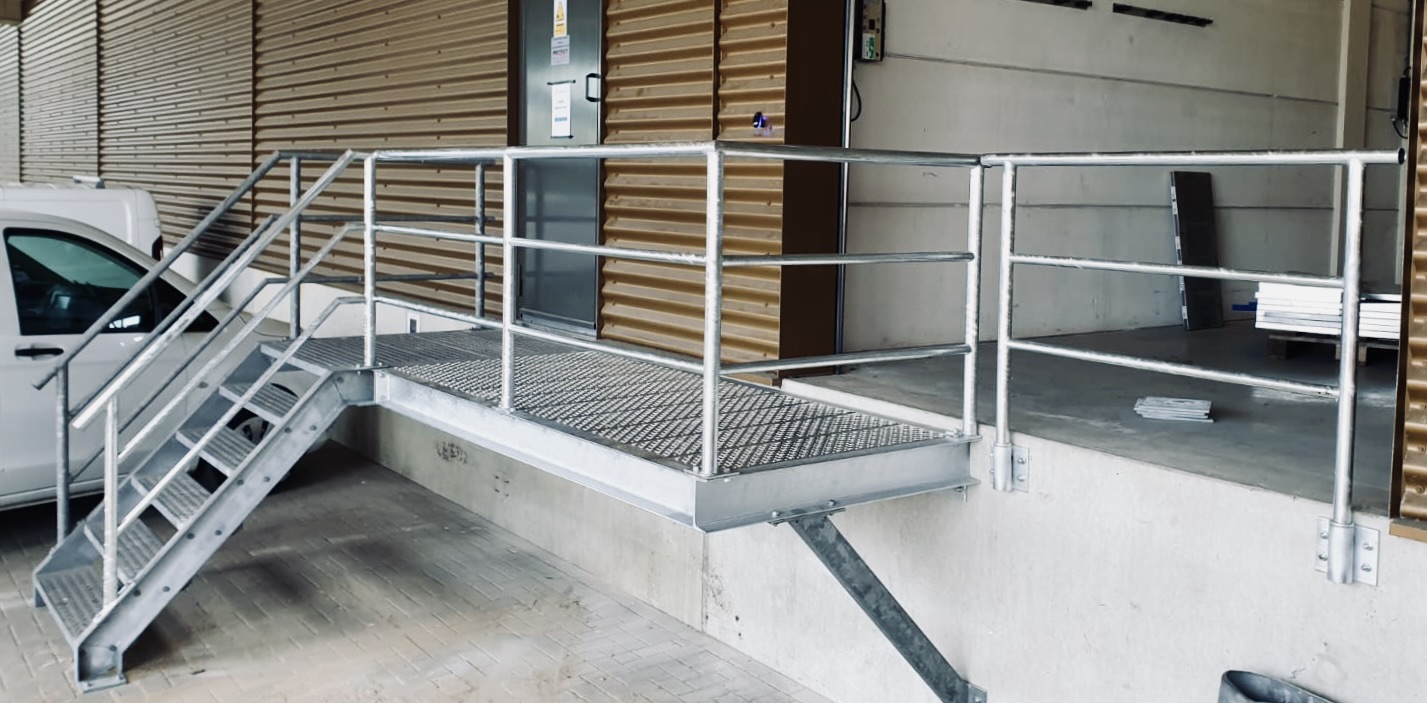
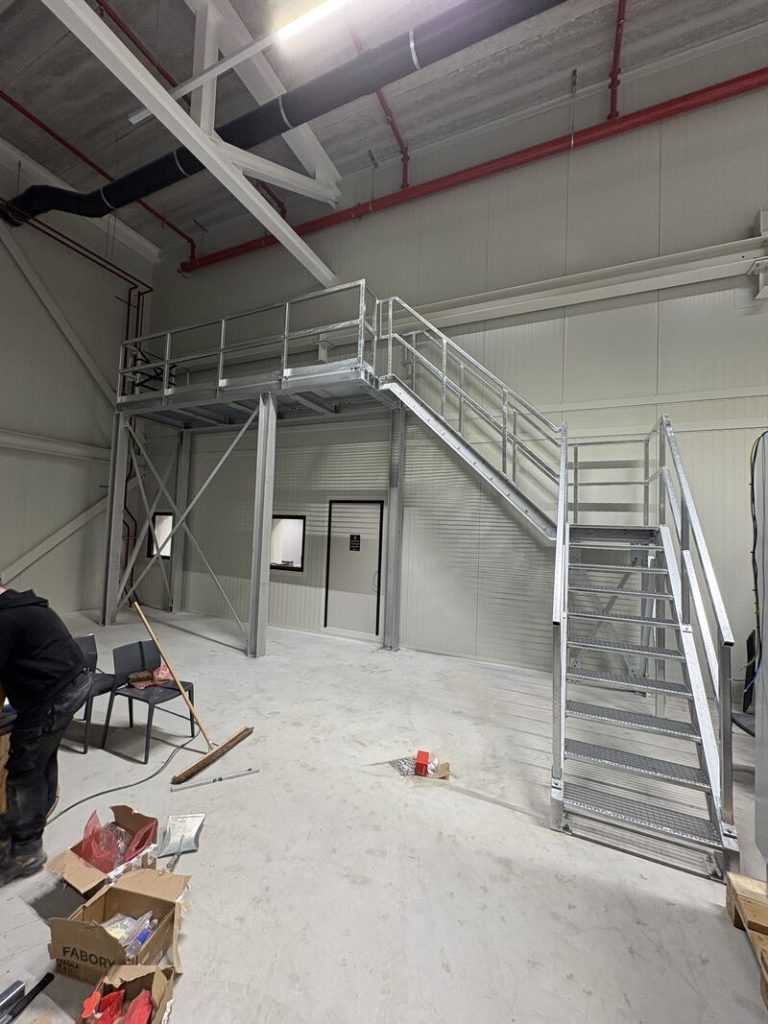
- Walkways, platforms and working floors in industrial and utility buildings
- Stair treads for both indoor and outdoor stairs, including emergency stairs and escape routes
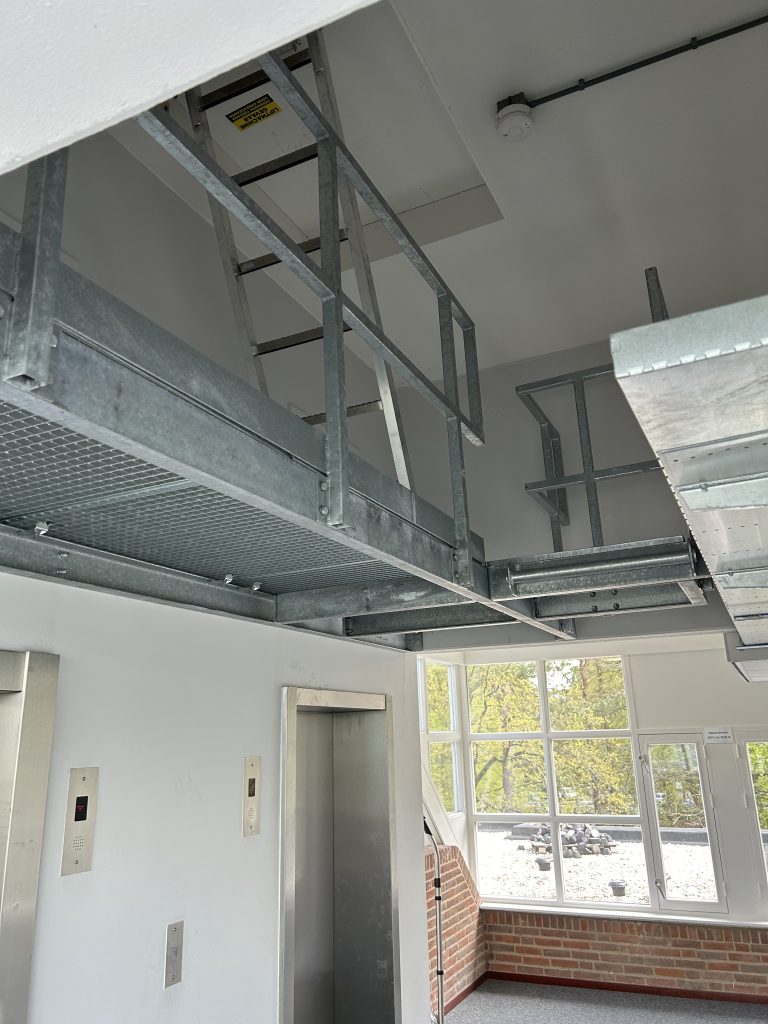
- Access bridges and connecting walkways between building sections
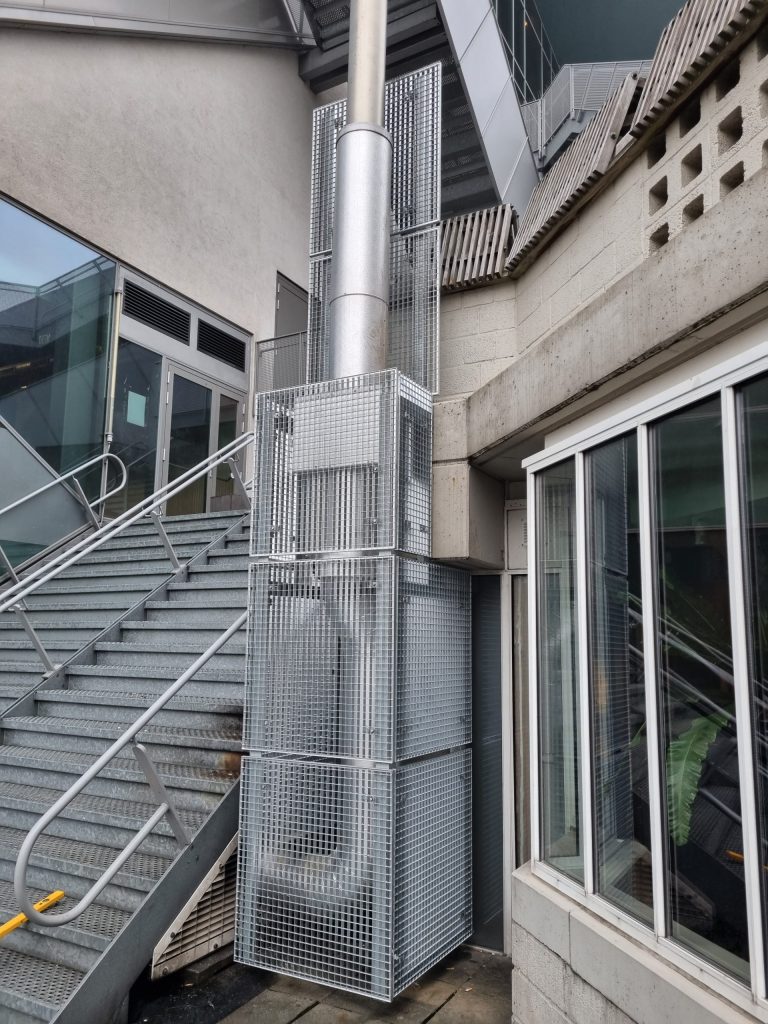
- Façade cladding and sun shading, where light transmission and appearance come together
- Balustrade infill and partitions in utility construction
- Ventilation grilles and covers above basement shafts or technical spaces
- Applications in offshore, shipbuilding and other environments with heightened corrosion resistance requirements
How is a custom pressure-locked grating made?
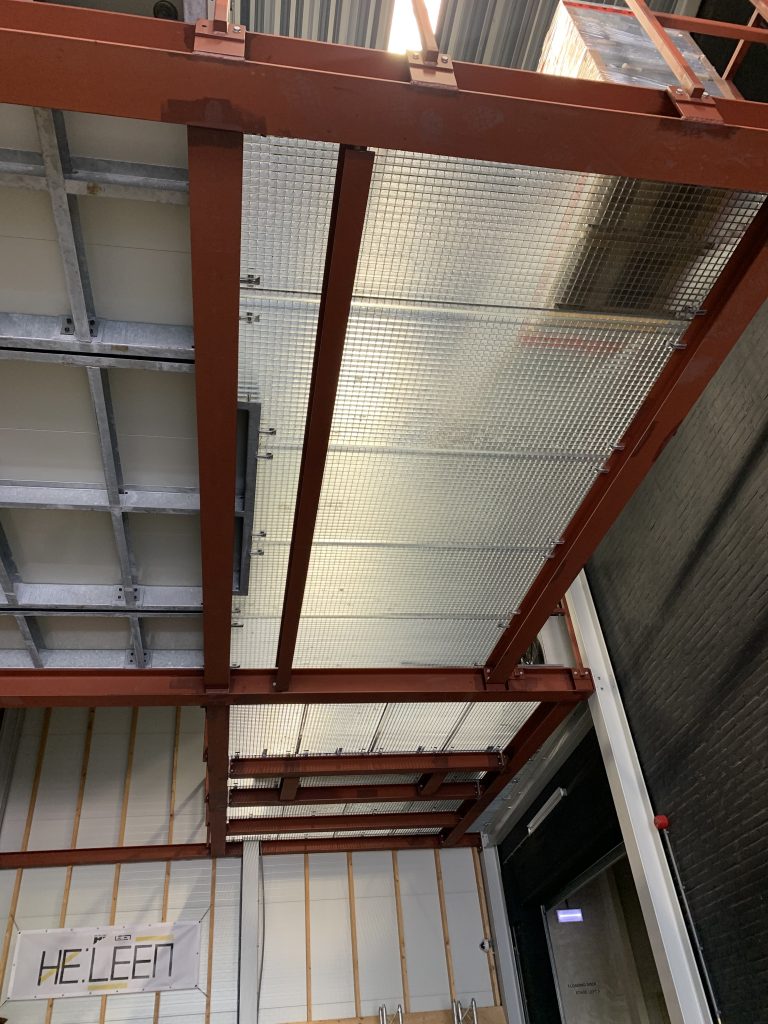
A pressure-locked grating is created by pressing the cross bars under high pressure into the bearing bars, rather than welding the bars together. This results in a mechanically strong connection with precise, consistent dimensions, which matters directly to the end user: panels align tightly and the grating stays dimensionally stable even under load. It’s also relevant for the end result that the edge of the grating is reinforced, so the whole remains sturdy and safe at its outer edges, and that an anti-slip version can be produced for situations with an elevated risk of slipping.
The precise dimensions, any cut-outs and connection points are determined in advance based on the drawing or the on-site situation, so the grating fits directly upon delivery and can be installed without additional cutting or fitting.
Material choice and finish
Custom pressure-locked gratings are available in steel, stainless steel and aluminium, with the choice determined by the environment and the desired lifespan of the grating. Steel is a commonly used base option for indoor applications; for outdoor use or damper environments, protective finishing options are available to extend the grating’s lifespan. For environments with chemicals, high hygiene requirements or a longer expected lifespan, such as food processing, petrochemical facilities or damp technical spaces, a stainless steel version is often more suitable due to its corrosion resistance. Aluminium pressure-locked gratings are considerably lighter than their steel counterparts and are therefore regularly used for suspended ceilings, façade cladding and situations where the weight of the structure is a limiting factor.
Various finishing options are also available in terms of colour and appearance, which is particularly relevant for visible applications such as façades, balustrade infill or sun shading where the building’s appearance plays a role. The most suitable finish is discussed and matched per project to the function of the grating: a working floor in a technical space calls for different priorities than a visible façade element at the front of a commercial building.
Good ventilation and light transmission
The open mesh structure allows air and light through, making the pressure-locked grating suitable for both functional floors and aesthetic applications such as sun shading.
Low maintenance
Dirt, water and dust pass directly through the grating, meaning pressure-locked gratings require less maintenance than a closed floor or façade finish.
Durable and reusable
Pressure-locked gratings in steel, stainless steel and aluminium are fully recyclable, making them a practical choice for projects where material use and lifespan matter.
Pressure-locked versus welded or heavy-duty grating
A pressure-locked grating is characterised by mechanically pressed cross bars, while a welded or heavy-duty grating is built from bars welded together into a rigid whole. The latter is generally more suitable for very heavy or concentrated loads, while the pressure-locked grating stands out for its versatility, design freedom and suitability for both functional and aesthetic applications. For projects primarily requiring regular foot traffic loads, the pressure-locked grating is usually the more practical choice.
Design freedom and practical installation
Because the mesh pattern, bearing bar height and edge finish can be determined per project, the pressure-locked grating allows for design choices beyond its structural function alone, such as with visible façade cladding. At the same time, installation remains practical: thanks to precise dimensioning, panels align tightly and can be installed easily with standard fixing methods.
Frequently asked questions about custom pressure-locked grating
What's the difference between a pressure-locked and a welded grating?
In a pressure-locked grating, cross bars are mechanically pressed into the bearing bars, while in a welded grating, the bars are welded together into a rigid whole. Pressure-locked gratings offer more freedom in mesh design and application, while welded gratings are often chosen for very heavy loads.
What applications suit a custom pressure-locked grating?
A pressure-locked grating is used as a walkway, platform, stair tread, façade cladding, sun shading and balustrade infill, among other applications. Its versatility comes from the ability to determine mesh design, material and finish per situation.
What materials are available for a pressure-locked grating?
Custom pressure-locked gratings are available in steel, stainless steel and aluminium. The choice depends on the environment, the desired lifespan and whether weight plays a role in the application.
Can a pressure-locked grating be made anti-slip?
Yes, for situations with an elevated risk of slipping, the grating can be produced in an anti-slip version, increasing grip on the walking surface.
Is a pressure-locked grating suitable for outdoor applications such as façades or sun shading?
Pressure-locked gratings are widely used in façade cladding and sun shading, partly thanks to the available protective finishing options. This also makes the grating suitable for prolonged exposure to outdoor conditions.
How precisely do multiple pressure-locked gratings align?
Thanks to the way the grating is manufactured, dimensional deviation is minimal, so multiple panels within the same floor area align tightly into a flat, continuous surface.
When is a heavy-duty grating a better alternative than a pressure-locked grating?
For very heavy or concentrated loads, such as intensive transport or heavy equipment, a heavy-duty grating is often more suitable due to its thicker bars and denser mesh pattern.
Related products
- Non-residential
Platforms / Grating floors
- Housing, Non-residential
Steel structures
- Housing, Non-residential
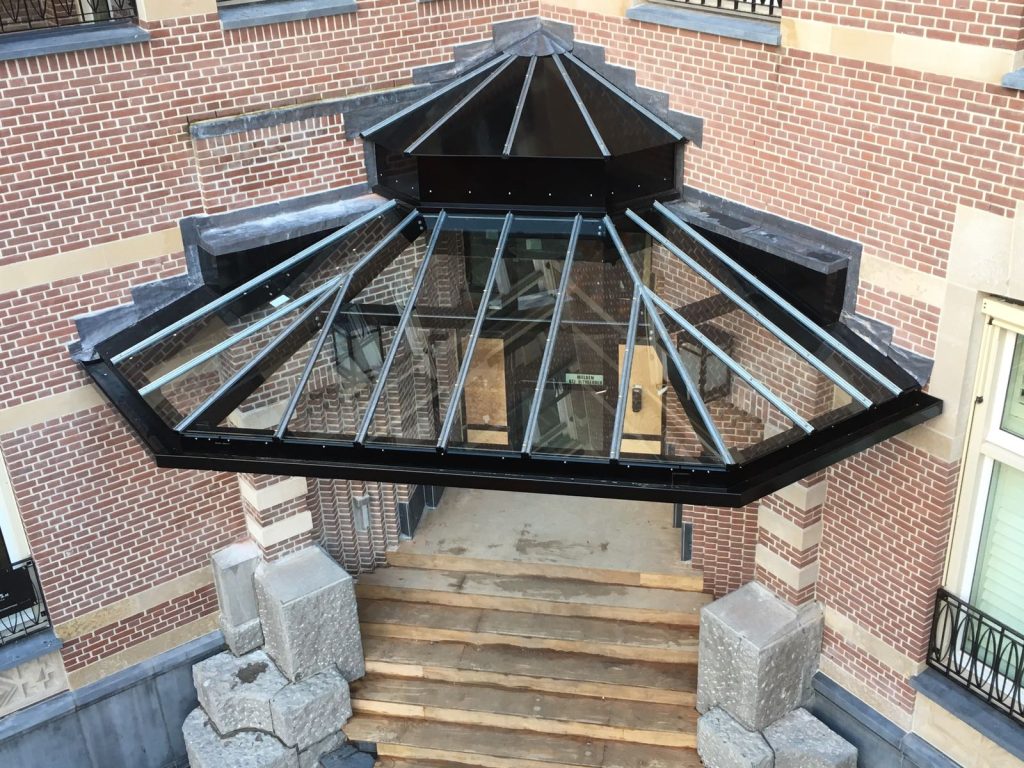
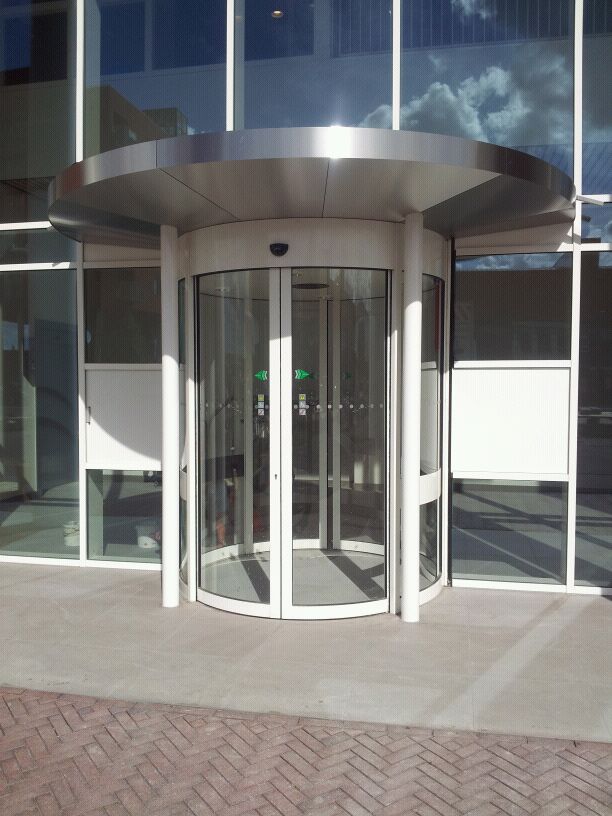
Canopies / Awnings
- Non-residential
Sheet metal
Related projects
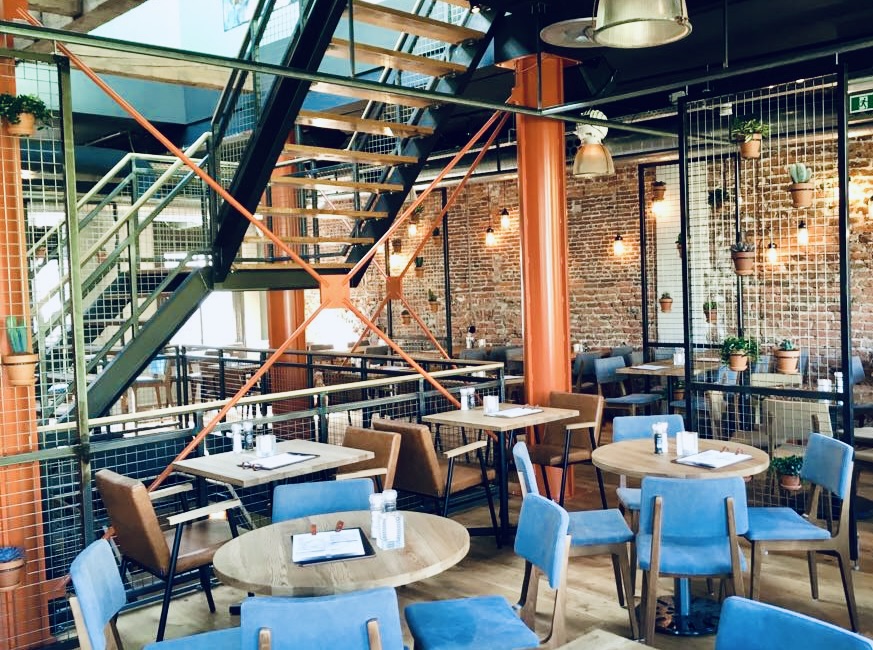
PK Bar & Kitchen Utrecht

Livestrong Curaçao
Why De Graaf Metaalwerken?
Materials and engineering
We are highly versatile in this area. Thanks to our extensive knowledge and experience, we can use the most suitable material for every project. This means we always offer a sustainable, well-thought-out and high-quality solution, perfectly tailored to your needs. We also take care of all the engineering and drawing work for your project in-house.
Production and assembly
The production of your project is carefully handled using our modern machinery and with attention to safe & healthy working conditions. We work quickly, flexibly and with an eye for quality, so that your project is always delivered on time and according to plan. Our VCA-certified engineers can also take care of the entire installation process for you.
Complete peace of mind
We take care of your project from start to finish. Our specialists ensure that everything is carried out accurately, efficiently and safely, while you benefit from a single point of contact for the entire process. This means you can count on a hassle-free implementation, optimal quality and a project that is delivered on time and according to plan, without any surprises.
Quality & Certification
We work in accordance with recognised standards and have the necessary certifications, such as NEN-EN 1090-1, which allows us to issue the CE certificate for our construction work.




Please contact us
Please feel free to contact us if you have any questions.
De Graaf Metaalwerken B.V.
Gageldijk 2
3602 AL Maarssen
+3130 – 2613843
info@degraafmetaalwerken.nl